


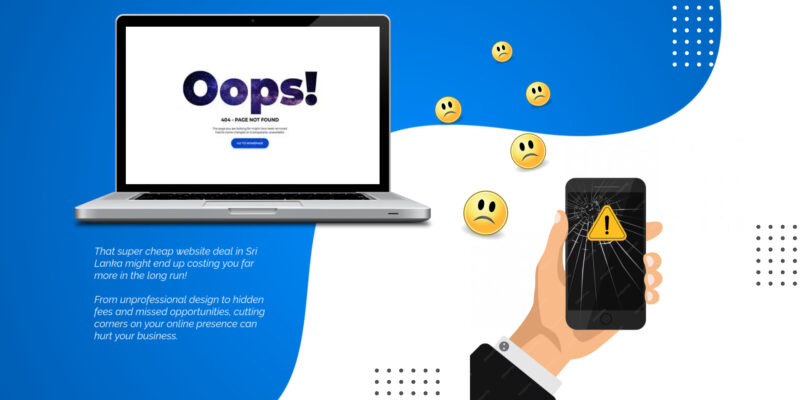
The True Cost of a Cheap Website in Sri Lanka
In the bustling digital landscape of Sri Lanka, the allure of a cheap website in Sri Lanka with a rock-bottom price can be strong. Offers starting as low as LKR 7,500 might seem like a budget-friendly way for small businesses and startups to establish their online presence. However, like many things in life, the cheapest option often comes with hidden costs that can far outweigh the initial savings. As a local entrepreneur or business owner in Colombo and beyond, it’s crucial to understand the “true cost” of a cheap website in Sri Lanka.
Why a Cheap Website in Sri Lanka May Hurt Your Business
A cheap website in Sri Lanka often relies on rigid templates and outdated frameworks. These sites may lack mobile responsiveness, SEO readiness, and essential security features. Without scalability or proper technical support, your business risks stagnation and frequent breakdowns—leading to costly rebuilds and lost opportunities.
Branding Limitations of Budget Web Design
Your website is your digital storefront. A cheap website in Sri Lanka typically fails to capture your brand’s essence, resulting in generic layouts and poor user experience. Investing in professional design ensures your site reflects your identity, builds trust, and encourages engagement—key factors in converting visitors into loyal customers.
Hidden Costs Behind the Low Price Tag
While the initial cost of a cheap website in Sri Lanka may seem appealing, the long-term expenses can be substantial. Slow loading speeds, frequent downtime, and lack of optimization can drive away potential clients. Add in the cost of redesigns, missed conversions, and damage to your reputation, and the “cheap” choice becomes far more expensive than expected.
The Surface Appeal vs. the Underlying Reality
A website is no longer just a digital brochure; it’s the online storefront, the first impression, and often the primary point of contact for potential customers. A website built on a shoestring budget often reflects that investment – or lack thereof – in several critical areas:
- Generic Design and Lack of Branding: These ultra-cheap options often rely heavily on pre-designed templates that look identical to countless other websites. Your unique brand identity, the very essence of what sets your business apart, gets lost in a sea of sameness. This can damage your credibility and make it harder for customers to remember you.
- Limited Functionality and Scalability: A basic, low-cost website might offer a few static pages, but what happens when your business grows? Need to add an online store, a booking system, or integrate with other business tools? Cheap websites are often built on rigid platforms with limited expandability, potentially requiring a complete and costly rebuild in the future.
- Poor User Experience (UX) and Mobile Incompatibility: In a mobile-first market like Sri Lanka, a website that isn’t optimized for smartphones and tablets is practically invisible to a significant portion of your potential customer base. Cheap websites often neglect responsive design, leading to a clunky, frustrating experience for users, causing them to leave your site quickly.
- Search Engine Optimization (SEO) Neglect: How will your target audience find you online? A website built without SEO considerations is like opening a shop in a hidden alleyway. Cheap website packages rarely include proper keyword research, on-page optimization, or the technical setup needed for search engines like Google to find and rank your site.
- Security Vulnerabilities: Security is paramount in today’s digital world. Cheaply built websites often lack essential security measures, making them vulnerable to hacking, malware, and data breaches. This can not only damage your reputation but also lead to legal and financial repercussions.
- Lack of Support and Maintenance: Who will you turn to when something goes wrong? Cheap website providers often offer minimal to no ongoing support. Updates, bug fixes, and security patches are often your responsibility, and neglecting them can lead to a malfunctioning or vulnerable website.
- Hidden Costs Down the Line: While the initial price tag might be low, be wary of hidden fees for even basic changes or additions. What seems cheap initially can quickly become more expensive in the long run as you try to patch the holes and add necessary features.
Investing in Your Online Future
Think of your website not as an expense, but as a crucial investment in your business’s future. A professionally designed and developed website, tailored to your specific needs and target audience, will:
- Build Trust and Credibility: A well-designed, functional website instantly conveys professionalism and trustworthiness.
- Attract and Convert Customers: A user-friendly website with clear calls to action can significantly improve your lead generation and sales.
- Enhance Your Brand Identity: A custom design reflects your brand’s personality and values, creating a memorable online presence.
- Provide a Scalable Platform for Growth: A well-built website can adapt and grow with your business needs.
- Improve Your Search Engine Visibility: Proper SEO ensures that potential customers can easily find you online.
- Offer Long-Term Value and Reduced Headaches: Investing in quality upfront can save you time, money, and frustration in the long run.
Making the Smart Choice for Your Sri Lankan Business
While the initial cost might be higher, choosing a reputable web development partner in Sri Lanka who understands your business goals and the local market will ultimately provide a far greater return on investment. Don’t fall for the trap of the cheapest option. Instead, focus on the long-term value and the crucial role your website plays in the success of your business in the competitive Sri Lankan market. Ask the right questions, understand what you’re truly getting, and choose a partner who will help you build a strong and sustainable online presence.
Ready to Build a Website That Works?
Don’t settle for cheap—invest in smart design that drives results. Let Epceylon Solutions help you create a website that’s built to grow your business, not just fill a space online.